

Top News
The New York Times reports that Alibaba used a network of Southeast Asian data centers to gain access to advanced Nvidia chips restricted from China, raising the possibility that those chips may have supported research at Zhejiang Lab, an AI institute co-founded by Alibaba with close ties to the Chinese military. More here.
A recent wave of outages at Microsoft, the FAA, Chase, the NSA, Workday, Apple, and United appears to stem largely from system upgrades gone wrong as AI tools uncover record numbers of software vulnerabilities and push IT teams into an unprecedented patching cycle. The Wall Street Journal has more here.
The Trump administration is considering requiring U.S. companies to publicly disclose their use of Chinese AI models such as Alibaba’s Qwen, DeepSeek, and Moonshot’s Kimi as a way to discourage reliance on the technology without imposing new restrictions, Reuters first reported. Reuters has more here.
California Gov. Gavin Newsom is proposing sweeping new AI rules that would let state officials order shutdowns of dangerous models, require independent safety monitors inside AI labs, and curb recursive self-improvement, pitching the framework as a national template ahead of a likely 2028 presidential run. Politico has more here.
Sponsored By …
"When we do our annual meetings with PortCos, we're just collating data. The decks are in some folder, there's an email in a partner’s inbox, there's a financial model somewhere. It's a lot of work to get the full story." - VP Ops, $200M+ AUM VC
Get your story together with PortfolioIQ.
Amidst Fears of AI Cyberattacks, Satya Nadella Says Lots of Critical Infrastructure Is ‘Unpatchable’

Image Credits: Adam Gray / Getty Images for The New York Times
By Lucas Ropek
During his appearance at The New York Times’ DealBook Summit on Wednesday, Microsoft CEO Satya Nadella lamented the fact that a lot of America’s software systems — including those governing everyday hardware and transportation systems — suffer from unfixable software vulnerabilities that, in the age of AI-aided cyberattacks, are just waiting to be exploited.
“Remember, there is a lot of stuff in our critical infrastructure that’s unpatchable,” Nadella said. “I mean, think about all the firmware and the chillers [a cooling device often used in data centers] and the HVAC systems everywhere else. So all of that, by the way, they’re on the internet.”
In other words: The smartification of the economy, in which much of the world’s “dumb” devices were hooked up to the internet, is now causing tremendous headaches.
The conversation took place against the backdrop of a wave of recent large-scale outages — including one involving Microsoft Outlook. Others have involved the NSA, the FFA, and Apple. Concerns have swirled that these outages are the result of cyberattacks, although officials have denied those claims. Still, the reality of AI-aided cyberattacks is spurring companies to find new strategies for vulnerability discovery and remediation.
Nadella touched briefly on the recent Outlook situation, noting that the global inconvenience was the result of a “latent bug” that led to a “perfect storm.”
“We put out an incident response, and we’re going to obviously take all of the learnings, both upstream architectural, as well as operational, and fix that,” he added.
Massive Fundings
BrightAI, a seven-year-old Palo Alto startup that uses sensors, robots, drones, and wearable AI to monitor critical infrastructure and guide field crews, raised a $97 million round led by Smith Point Capital, with Cobalt Capital, Marlinspike Partners, Zero Infinity Partners, and GE Vernova as well as previous investors Khosla Ventures, Inspired Capital, and Upfront Ventures also buying in. The company has raised a total of $184 million. More here.
Hone Health, an eight-year-old New York startup that provides ongoing physician-led longevity care through diagnostic testing, medical consultations, and personalized treatments, raised a $28 million Series A round led by MarcyPen Capital Partners, with Pentland Ventures, Kinship Ventures, Hanwha, Gannet Capital, humbition, Comma Capital, ID Ventures, and David Grutman also buying in. It also secured $200 million in growth financing from General Catalyst's Customer Value Fund. The company has raised a total of $65 million in equity funding. Tech Funding News has more here.
Marrow Therapeutics, a two-year-old startup based in Watertown, MA, that develops injectable medicines that deliver RNA therapies to bone marrow cells to treat severe blood disorders, raised a combined $173 million across Series A and Series B rounds. The $53 million Series A was co-led by Scion Life Sciences and venBio. The $120 million Series B was led by OrbiMed, with RTW Investments, Surveyor Capital, Opaleye, NEXTBio Capital, Affinity Advisors, KKR, Spruce Street Capital, and Columbia Threadneedle Investments as well as previous investors Scion Life Sciences and venBio also participating. BioPharma Dive has more here.
Payhawk, an eight-year-old London startup that automates corporate spending, payments, procurement, travel, and financial reporting for businesses, raised a $280 million Series C round at a $2 billion valuation. The deal was led by Goldman Sachs Alternatives, with QED, Greenoaks, Lightspeed, Hedosophia, Bek Ventures, Galdana Ventures, Cogito Capital, Inveready, and Invus also investing. The company has raised a total of $515+ million. EU-Startups has more here.
Pulley, a five-year-old San Francisco startup that pairs permitting experts with AI agents to speed commercial construction approvals, raised $64 million across two rounds: a $41 million Series B led by Jump Capital, with Catalyst Investors also anteing up, and a $23 million Series A led by CRV and Susa Ventures. More here.
Ramon.Space, a 22-year-old company based in Englewood, CO, that develops onboard systems that process, store, and transmit data for commercial and government satellites, raised a $124 million Series B round led by PSG, with Micron Technology, Senvest, and Phoenix Financial as well as previous investors StageOne, Deep Insight, and Grove Ventures also stepping up. The company has raised a total of $180 million. Payload has more here.
Variational, a five-year-old startup based in George Town, Cayman Islands, that operates an onchain derivatives platform for trading crypto and traditional assets, raised a $110 million Series B at a $1.5 billion valuation. The deal was led by Bain Capital Crypto, with HSG and Peak XV as well as previous investor Dragonfly also participating. The Block has more here.
VitriVax, a nine-year-old Boulder startup that develops vaccine candidates and formulation technology designed to enable single-dose, easier-to-store vaccines, raised an $87 million Series C co-led by F-Prime, NEA, RA Capital Management, and Sanofi Ventures, with Eli Lilly and Company also participating. More here.
Big-But-Not-Crazy-Big Fundings
Darcy Geothermal, an eight-year-old startup based in New Brighton, MN, that designs and installs groundwater-based geothermal heating and cooling systems for large buildings, campuses, and shared thermal networks, raised an approximately $15 million Series B round co-led by Aligned Climate Capital and Büetigen. More here.
Dcubed, a seven-year-old Munich startup that manufactures release actuators, deployable hardware, solar arrays, and power systems for satellites, raised a $29.9 million Series A extension led by Warsaw Equity Group, with European Innovation Council, HTGF Opportunity Fund, BayBG, and Expansion Aerospace Ventures also participating. Payload has more here.
Humyn Labs, a Bengaluru startup founded this year that records and labels footage of people performing everyday tasks to create training data for robotics models, raised a $26 million Series A round led by Accel, with Prosus Ventures, BeeGlobal, Bajaj Finance's Finserv Intelligence, Bajaj Alts AI Opportunities Fund, Dallas Venture Capital, Lighthouse Canton, and Jump Trading also chiming in. It also secured $21 million in venture debt. TechCrunch has more here.
Remanence, a two-month-old Paris startup that turns companies’ AI-agent activity into specialized models they can train and own, raised a $30 million seed round co-led by EQT Ventures and FirstMark, with Zero Prime Ventures, Emblem, Drysdale Ventures, Global Founders Capital, and Yellow also opting in. VentureBurn has more here.
Sequel.io, a seven-year-old San Francisco startup that uses video and website engagement data to help B2B marketers personalize content and customer outreach, raised a $15 million round led by Sorenson Capital, with High Alpha, Album VC, and Webflow Ventures as well as previous investors Javelin Venture Partners, Struck Capital, Alumni Ventures, and Social Leverage also taking part. The company has raised a total of approximately $26 million. More here.
Speakeasy, a three-year-old New York startup that combines ticketing, reservations, payments, guest management, and marketing tools for live event and hospitality operators, raised an $18.8 million Series A round led by VMG Technology, with Capital One Ventures as well as previous investors Positive Sum and Yamaha Music Innovations Fund also taking stakes. The company has raised a total of approximately $27 million. Tech Funding News has more here.
Vero Security, a one-year-old New York and Tel Aviv startup that enforces company security policies across employees’ AI tools and agents as products, permissions, and risks change, raised an $11 million seed round led by TLV Partners, with GTM Capital and Maple Capital also buying in. CTech has more here.
Zya, an eight-year-old UK startup that makes an enzyme that converts part of the sugar in food into prebiotic fiber after consumption, raised a $15 million Series A led by Astanor, with Ahren Innovation Capital, Red Bull Ventures, Zubi Capital, Phase Change, and Meach Cove Capital also anteing up. More here.
Smaller Fundings
Aarden, a one-year-old Seattle startup that uses AI to help landowners, developers, and investors evaluate large properties’ uses, values, and potential transaction partners, raised an $8 million round led by Overture Ventures, with additional participation from Madrona and Propeller Ventures. The company has raised a total of $12 million. The SaaS News has more here.
each::labs, a two-year-old San Francisco startup that lets production studios, e-commerce brands, and app developers generate images, video, and audio through reusable workflows and AI models, raised a $7 million seed round co-led by Revo Capital and the European Bank for Reconstruction and Development (EBRD). Tech Funding News has more here.
Fermat, a four-year-old Barcelona startup that uses generative AI to turn fashion sketches and mood boards into garment visuals and factory-ready specifications, raised an $8 million seed round co-led by Kibo Ventures and Lunar Ventures, with PROfounders Capital, Masia Ventures, Blue Wire Capital, Common Magic, Betaworks, and Dídac Lee also anteing up. Tech Funding News has more here.
Iconic, a one-year-old Amsterdam startup that uses AI to review technical and commercial documents for inconsistencies in large infrastructure and industrial projects, raised a $10 million seed round led by Peak Capital, with Bridford Group, Common Magic, Graduate Ventures, NP-Hard, and Tiny VC also chiming in. More here.
MountAIn, a one-year-old startup based in Grenoble, France, that automatically adapts computer vision applications to run on low-cost, low-power chips in connected devices, raised an $8 million seed round. Investors included 360 Capital, Supernova Invest, and Crédit Agricole Alpes Développement. EU-Startups has more here.
Mulga, a two-year-old Austin startup that develops open-source software that lets organizations run AWS applications on other public clouds or their own infrastructure, raised a $1.77 million pre-seed round co-led by Rally Ventures and backtrace, with Eastend Ventures also engaging. The SaaS News has more here.
Perry AI, a one-year-old London startup that uses AI agents to review documents and prepare legal drafts for private capital funds and their law firms, raised a $2.2 million seed round led by Haatch, with Antler, Arāya Ventures, Syncorp Ventures, and Kelsey Chase also opting in. EU-Startups has more here.
Pretxt, a startup founded this year based in Aspen, CO and Dublin that monitors AI agents as they work and redirects actions that deviate from company procedures, raised a $5 million seed round led by Deciens Capital, with Howdy Partners, Service Provider Capital, and NSV Wolf Capital also pitching in. SiliconANGLE has more here.
Treat, a Helsinki startup founded this year that uses AI-assisted intake to brief doctors before digital primary-care consultations for employees, raised a $3.3 million pre-seed round co-led by byFounders and Illusian. Tech.eu has more here.
Unsiloed AI, a one-year-old San Francisco startup that turns complex enterprise documents into structured data that AI agents can reliably use, raised a $7.5 million seed round led by Felicis, with Y Combinator, Orange Collective, and Uncorrelated Ventures also taking part. TechCrunch has more here.
Sponsored By …
Is Peacebuilding Effective Altruism's Missing Opportunity?
Effective altruism asks where each dollar can do the most good. Conflict doesn't just cost lives. It can erase years of progress in health, education, and economic development. Yet conflict prevention remains overlooked and underfunded.
The International Fund for Peace is developing a model combining local knowledge, technology, and stronger institutions to identify risks early and help prevent violence. Join us in building the peace infrastructure. Robert J. Berg, Chair, IF4Peace.org
Exits
Palo Alto Networks has agreed to acquire one-year-old San Francisco AI startup Applied Compute, which helps companies train and run custom models on proprietary data, in a $4.5 billion all-stock deal just weeks after the company raised $350 million at a $3.25 billion valuation. Applied Compute raised a total of $510 million from investors including Elad Gil, Kleiner Perkins, Lux Capital, Hanabi Capital, NVIDIA, Blackstone, Sequoia Capital, Benchmark, Greenoaks, Conviction, Shopify Ventures, HubSpot Ventures, Neo, Diffusion, Definition, Timeless, Layer Global, Abstract, Nova, Quantum Light, First Harmonic, and Swish. The Wall Street Journal has more here.
Going Public
After reports yesterday that Anthropic was considering raising its IPO price above its initial $70-to-$78 range and selling more shares, the AI company priced the offering at $83 a share and increased its size, valuing Anthropic at roughly $1.5 trillion on a fully diluted basis. TechCrunch has more here.
People
Nvidia interim CEO Colette Kress told employees at her first companywide meeting that they will receive pay raises and more equity in December – months ahead of schedule – as the company tries to steady its workforce following Jensen Huang’s ouster. Wired has more here.
Philosopher Thomas Nagel, who this week won the $1 million Berggruen Prize for Philosophy & Culture, calls the idea that current AI systems might be conscious “just ridiculous” and warns that companies such as Anthropic risk misleading people by designing chatbots to simulate introspection and apparent mental states. Wired has more here.
Elon Musk says Nvidia’s decision not to reinstate Jensen Huang is like “kicking Michael Jordan off your team,” arguing that Huang is irreplaceable and dismissing concerns that his affair with an alleged Chinese spy makes him disloyal to the U.S. TechCrunch has more here.
Palmer Luckey observed that AI-powered cyberattacks are outpacing defenses because attackers are moving faster than organizations running outdated systems can respond, warning that the U.S. needs to accelerate adoption of AI for cybersecurity: “It’s time to start running.” TechCrunch has more here.
OpenAI CEO Sam Altman warns that a gradual “handover” of decision-making power from humans to increasingly capable AI is a “terrible idea,” arguing that people must remain in control of the future even as AI systems become capable of improving themselves. TechCrunch has more here.
Post-Its
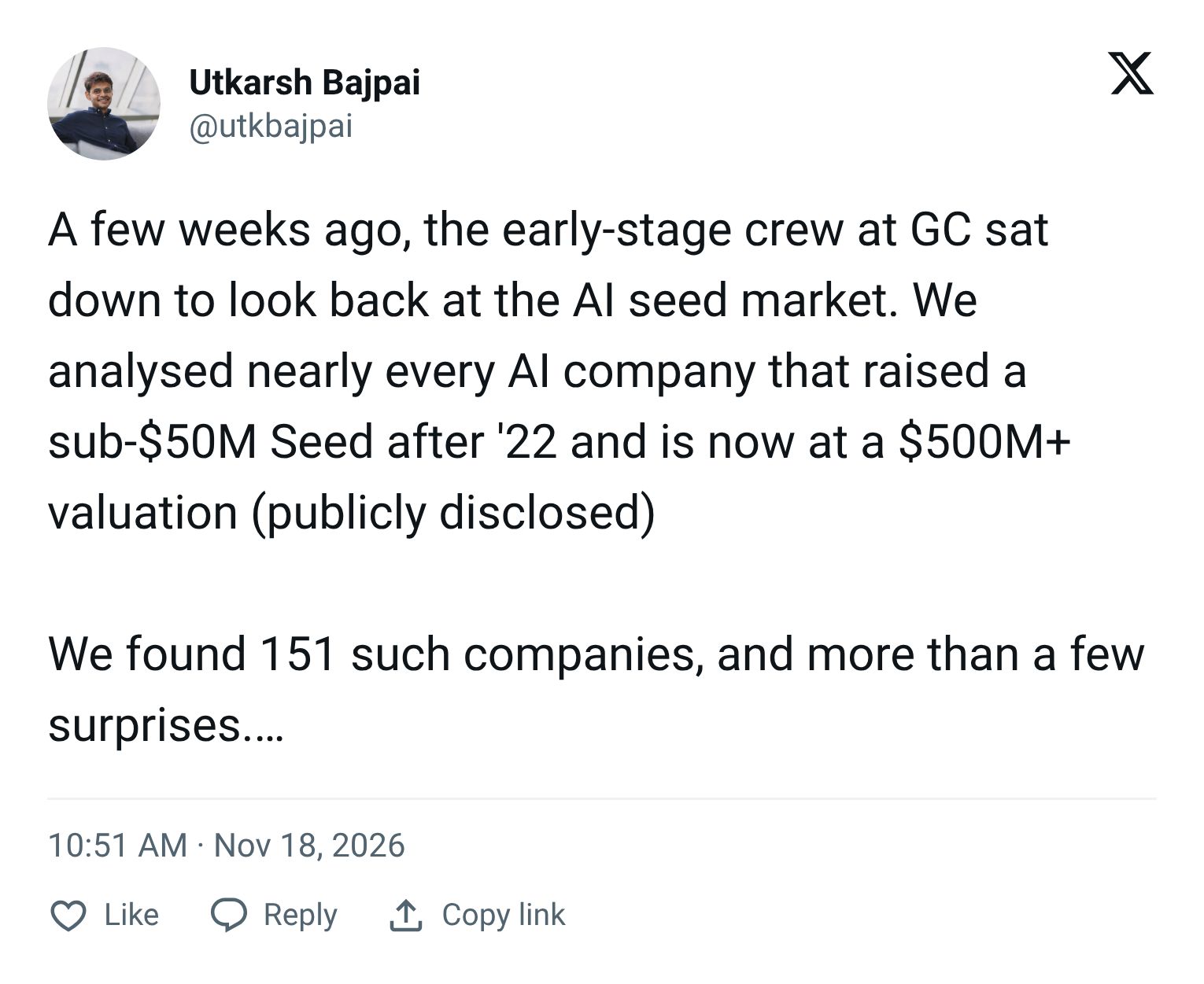
Data
A Gallup and Boston Children’s Hospital survey of 15,925 people ages 15 to 22 across 16 countries found that 33% use AI for companionship, rising to 50% among daily AI users, while those who rely on AI companions or online-only friendships reported higher odds of loneliness. Wired has more here.
Essential Reads
The reviews for Grand Theft Auto VI are in. Bloomberg’s Jason Schreier calls it a “masterpiece,” praising its vast, unpredictable world, photorealistic detail, and dark humor after playing the game for more than 45 hours. More here.
Internal Meta documents obtained by NPR show the company’s school partnership program was designed in part to recruit more teens to Instagram through school profiles, student directories, and targeted notifications, even as Meta publicly promoted it as a safety initiative. Nearly 17,000 schools had signed up as of September. More here.
A small Buddhist sect has been courting Silicon Valley through AI fellowships and Bay Area pop-ups that have attracted hundreds of participants, while former members say its ultimate ambition is to become the tech industry’s spiritual authority and shape a dharmically aligned AI. The New Yorker has more here.
Detours
A new trailer for the Sam Altman biopic Artificial just dropped.
The inaugural Super Age Games drew 530 athletes from 42 states and 15 countries to New York for eight physical and cognitive challenges measuring markers of healthy aging, including strength, aerobic capacity, balance, agility, and processing speed.
A viral SNL sketch about sisters becoming the default caregivers for aging parents is hitting a little too close to home.
From a neverthriving of jugglers and a shudder of clowns to a grumbling of buses and a stampede of philatelists, English has accumulated some truly strange collective nouns.
Brain Rot

Retail Therapy

Image Credits: Brown Harris Stevens
A six-story prewar townhouse on Manhattan’s Upper East Side has hit the market for $12 million, with a courtyard garden, detached carriage house, full-floor primary suite, and penthouse fitness center.
Chipotle’s limited-edition “Sneak It In” hoodie, which has a hidden insulated pocket for smuggling burritos into movie theaters, dropped today at 9 a.m. PT for $53, sold out within 30 minutes, and is now appearing on eBay for close to three times the original price.
TechCrunch reviews Sony’s new $399.99 PS-LX3BT turntable, a beginner-friendly successor to the PS-LX310BT that adds USB-C power, higher-quality Bluetooth audio, automatic playback, and USB digitization while still requiring separate speakers or headphones.
Tips (the non-pecuniary kind)
Please send all of your hot gossip to [email protected] or [email protected].
Want to advertise on StrictlyVC?
To book ads directly, contact us at [email protected].