

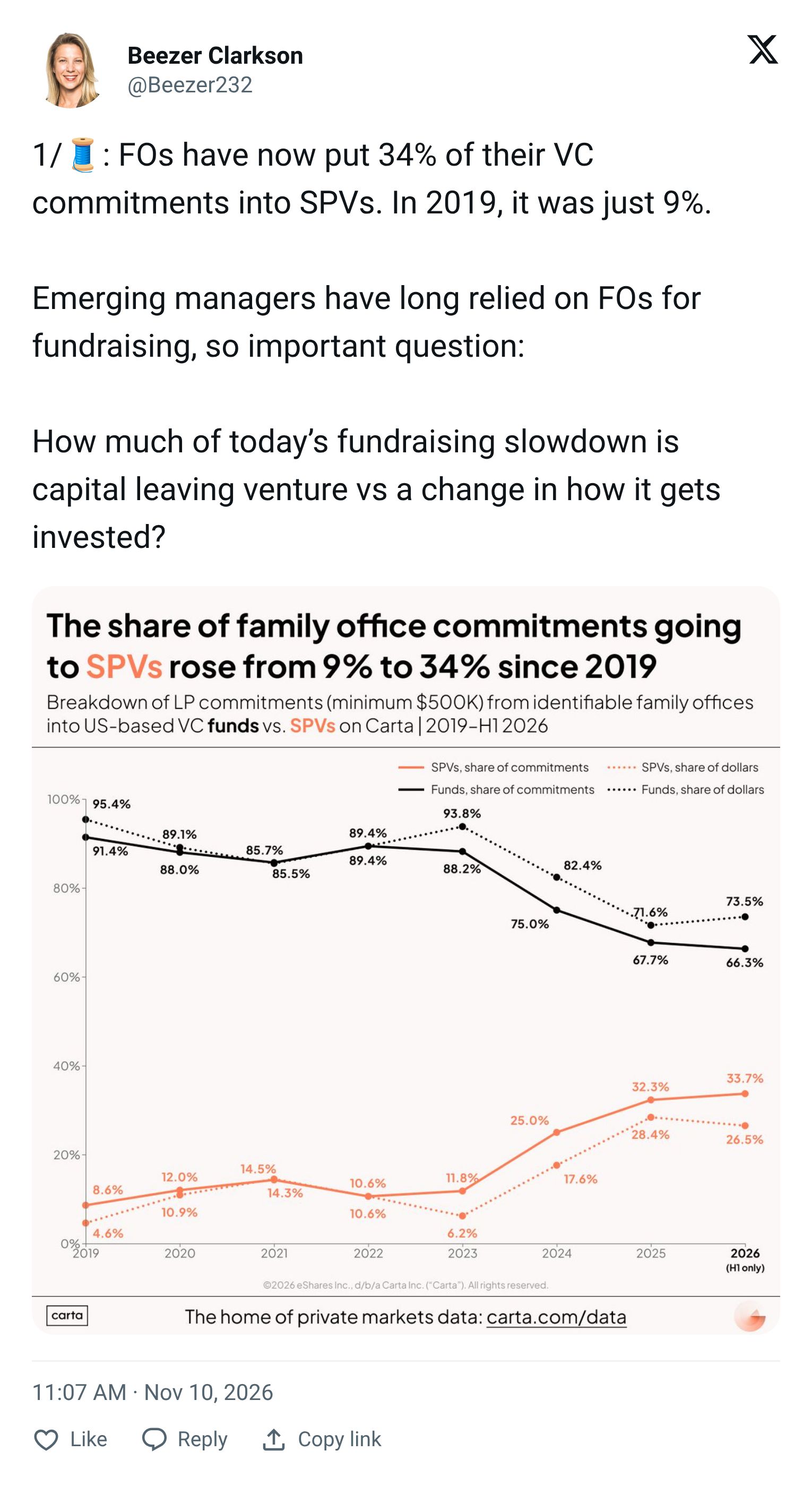
If you’re interested in shop talk about how limited partners are thinking through asset concentration, secondary sales, and how to deal right now with venture fund managers who are coming back to them on a yearly basis (versus the traditional three or four years), check out the newest episode of StrictlyVC Download, featuring Beezer Clarkson of LGT Capital Partners, a diversified asset manager, and Amit Bhatti of TrueBridge, an outfit that focuses solely on backing venture firms. We really enjoyed talking with them.
Top News
Anthropic plans to offer 825 million shares at $70 to $78 apiece in its IPO, potentially raising up to $64.35 billion and valuing the five-year-old AI lab at as much as $1.4 trillion on a fully diluted basis. Separately, Google, Nvidia, Microsoft, AMD, Broadcom, Micron, and TSMC have agreed to buy another $26 billion of stock in a private placement. TechCrunch has more here.
Goldman Sachs expects Anthropic’s revenue to exceed $600 billion by 2030 – up from $4.6 billion in 2025 and a projected $52 billion this year – while forecasting that the AI company will not become free-cash-flow positive until 2030 and will burn $65.7 billion in 2027. The Financial Times has more here.
Nvidia has hired Wachtell Lipton to advise its board on the investigation into CEO Jensen Huang’s affair with Alice Huang, with former acting U.S. attorney Joon H. Kim leading the inquiry. The New York Times has more here.
OpenAI’s quarterly revenue jumped roughly 50% to $10 billion, but its adjusted operating loss still widened slightly to $10.9 billion, underscoring how far it remains from profitability even as growth accelerates. The Wall Street Journal has more here.
Sponsored By …
The future starts small.
Albion and 8VC use Scout to constantly monitor the markets that matter.
Nvidia’s Crisis Has Corporate Governance Experts Reaching for the Popcorn

Image Credits: mattjeacock / iStock / Getty Images
By Connie Loizos
Nvidia’s stock sank 5.47% on Tuesday following a 4% drop on Monday, a loss of about 9.5% in two days, even though there wasn’t much news out of the company. CEO Jensen Huang has reportedly been trying to conduct business as usual after admitting to an extramarital affair with Alice Huang, whom U.S. intelligence agencies believe was spying for China. The biggest development: the board hired the law firm Wachtell, Lipton, Rosen & Katz to conduct an internal investigation.
What comes next is mostly a guessing game, even for the people who study how boards are supposed to handle crises. Two corporate governance professors, Ann Lipton of the University of Colorado and Todd Henderson of the University of Chicago, say there is no real precedent for a CEO caught up in a suspected honeypot. And while they have views on what the investigation should ask, like everyone else, they’re watching to see how it plays out.
“There have actually been affair cases and sexual harassment cases,” Lipton said, but was quick to add that she doesn’t know of previous cases that also involve potential national security compromises. Henderson, whose research interests include corporations, securities regulation, and law and economics, said much depends on facts few people have yet, including, most importantly, what, if anything, Alice Huang got out of Jensen Huang. (Secrets about Nvidia’s fabs or chip designs would matter to the Justice Department. Ordinary corporate information probably would not.)
Lipton described the investigation led by Nvidia’s independent board members, with their own outside counsel, as perhaps the most “standard” aspect of the whole affair so far. She also observed that an investigation will be “exactly as thorough” as the directors running it want it to be, which is also standard. Henderson made a related point about incentives, saying that Washington law firms that conduct internal investigations “know who pays their bills.” He didn’t suggest that is happening here.
Lipton said she sees three lines of inquiry, including whether the law was broken, whether Huang violated Nvidia’s internal policies, and whether the board was misled, including how forthcoming he was and when he was on notice. It’s notable, as Wired reported Monday, that Huang hired a PR crisis firm known for handling sex scandals a full year ago. Of course, the driver could have been about the affair alone. It’s unclear when Huang learned Alice Huang was a suspected spy. The board said in a Sunday statement about the matter that Nvidia has “has no reason to believe that either national security or NVIDIA secrets were compromised.”
Massive Fundings
Charta Health, a three-year-old San Francisco startup that uses AI to review medical charts for providers and insurers and verify claims coding against clinical documentation, raised a $55 million Series B round led by Insight Partners, with additional participation from QuantumLight as well as previous investors Madrona, Bain Capital Ventures, and South Park Commons. The company has raised a total of $85 million. More here.
Clara, a five-year-old São Paulo startup that helps companies manage corporate spending, invoices, bills, and cross-border payments, raised $105 million in new financing, including a $65 million Series C anchored by Citius, Kaszek Ventures, and DEG plus $40 million in renewed growth financing from previous investor General Catalyst’s Customer Value Fund. Bloomberg has more here.
Daylight, a two-year-old Tel Aviv and New York startup that combines AI agents with human security experts to detect, investigate, and respond to cyber threats, raised an $80 million Series B round at approximately an $400 million valuation. The deal was led by Goldman Sachs Alternatives, with additional support from Okta Ventures, Bain Capital, Craft Ventures, Vintage Partners, and Maple Capital. The company has raised a total of $120 million. More here.
Laza Medical, a five-year-old startup based in Campbell, CA, that develops AI and robotic imaging systems that guide clinicians during minimally invasive cardiovascular procedures, raised a $160 million Series B round led by GE HealthCare, with previous investors Unorthodox Ventures, PA MedTech, and AMED also anteing up. More here.
Mercor, a three-year-old San Francisco startup that provides expert data and testing environments for companies to train and evaluate AI models on professional work, raised a $750 million Series D round at a $20 billion valuation. Investors included Benchmark, Felicis, Fundomo, Apollo, G Squared, General Catalyst, Glade Brook Capital, Nvidia, Salesforce, Sapphire Ventures, StepStone Group, XTX Ventures, and Zoom. More here.
Oyster Therapeutics, a six-year-old London startup that develops oral medicines that remove harmful tau proteins from brain cells to treat Alzheimer's and other neurodegenerative diseases, raised a $60 million Series A round led by 4BIO Capital, with Eli Lilly, CE Ventures, Actium Group, and TOHO Ventures as well as previous investors Syncona, Oxford Science Enterprises, Mission BioCapital, and MGB Ventures also digging in. European Biotechnology has more here.
Path Robotics, an eight-year-old startup based in Columbus, OH, that develops AI systems that enable industrial robots to autonomously perform complex, variable welding tasks, raised a $300 million Series E round at a $2.45 billion post-money valuation. The deal was led by Georgian, with D. E. Shaw Ventures and NAVER Ventures as well as previous investors Addition, Drive Capital, IronArc Ventures, Tiger Global, and Yamaha Motor Ventures also participating. The company has raised a total of $610+ million. Investing.com has more here.
Project Faro, a two-month-old stablecoin venture expected to be incorporated in the U.S. that plans to issue dollar- and other G7 currency-backed tokens, has secured around $270 million in commitments to cover its first five years of operating costs. Participants include Goldman Sachs, Citigroup, Santander, Deutsche Bank, Wells Fargo, Fidelity, MUFG, and Standard Bank. Bloomberg first reported the news. CoinDesk has more here.
Reflect Orbital, a four-year-old startup based in Hawthorne, CA, that builds orbital mirrors to redirect sunlight for solar power and nighttime illumination, raised a $73.5 million round. Previous investors Sequoia Capital, Lux Capital, and Starship Ventures participated alongside new investors Buckley Ventures, Convective Capital, The Uncommon Group, and Salesforce Ventures. The company has raised more than $100 million in total. More here.
Vumedi, an 18-year-old Oakland company that uses AI to help physicians find and compare specialists’ clinical guidance from its video and podcast library, raised a $104 million Series B round from Oak HC/FT. More here.
Big-But-Not-Crazy-Big Fundings
Alta, a San Francisco startup founded this year that is building blockchain infrastructure with built-in privacy and compliance controls for financial institutions, raised a $47.5 million Series A led by Index Ventures, with GV, Blackbird Ventures, Square Peg, and Capital 49 also digging in. The company has raised a total of $80 million. The Block has more here.
Alterra Labs, a one-year-old New York startup that builds simulated medical environments for testing and training AI models on clinical tasks, raised a $12.5 million seed round led by Oak HC/FT, with Flare Capital Partners and Company Ventures also participating. Fortune has more here.
Bay, a Tel Aviv startup founded this year that provides security software that governs AI agents across employee devices, cloud infrastructure, and business applications, raised a $37 million Series A round led by Battery Ventures, with Micron Ventures, M12, and Assaf Rappaport also taking stakes. The company has raised a total of $50 million. More here.
Dreeze, a one-year-old Tel Aviv startup that restores cloud applications and the infrastructure, configurations, credentials, and connections they need following disruptions, raised a $33 million seed round co-led by Norwest and Bessemer Venture Partners, with Claltech also opting in. CTech has more here.
Graphon Labs, a one-year-old San Francisco startup that gives AI agents persistent memory across changing documents, images, videos, and other enterprise data, raised a $35 million Series A led by RRE Ventures, with Energy Impact Partners, Hitachi Ventures, Gaia VC, and HP also investing. Business Insider has more here.
Nidus, a one-year-old New York startup that builds AI-powered robotic systems to automate precision manufacturing inside defense factories, raised a $30 million round backed by Kleiner Perkins and previous investor Costanoa, with additional participation from Ludlow Ventures, SF1, Absolute Partners, and Tau. More here.
Operand, a two-year-old San Francisco startup that uses AI and alternative data to conduct due diligence for private equity firms, has raised $31 million across seed and Series A rounds. Khosla Ventures was the deal lead, with Y Combinator, Felicis, Soma Capital, and SV Angel also joining in. More here.
PORT, a six-year-old London startup that operates e-bike rental hubs for couriers and uses fleet data to train autonomous delivery robots, raised a $16.3 million round co-led by EBRD and Balnord. The company has raised a total of $32.5 million. Tech Funding News has more here.
Primordial Labs, a five-year-old startup based in New Haven, CT, that develops natural-language software that lets military crews command sensors, communications equipment, displays, and uncrewed systems, raised an $18 million Series A round led by Ballistic Ventures, with previous investors Squadra Ventures and Lockheed Martin Ventures also investing. More here.
SRTD Biotech, a seven-year-old startup based in Jülich, Germany, that develops mRNA therapies that activate therapeutic proteins only in diseased cells with specific RNA markers, raised a $35.3 million seed round co-led by Mérieux Equity Partners, NRW.BANK, and Boehringer Ingelheim Venture Fund, with Lilly Ventures, HTGF, and Anobis Asset also stepping up. European Biotechnology has more here.
Sumary, a one-year-old Copenhagen startup that automates accounting firms’ monthly closes, VAT returns, and year-end preparation using AI, raised a $25 million seed round led by Singular, with previous investors byFounders, Partech, and Tenity also taking part. The company has raised a total of $29.2 million. Tech Funding News has more here.
Smaller Fundings
Agent F, a one-year-old Berlin startup that builds AI agents to automate accounting, financial controlling, and planning across companies’ existing finance systems, raised a $4 million pre-seed round led by Alpha Edison, with United Founders and Tiny Supercomputer Investment Company also chipping in. More here.
Ancep, a London startup founded this year that uses AI agents to automate routine commercial insurance placement work for brokers, raised an $8.5 million round led by Creandum, with Kleiner Perkins, and Vicus Ventures also pitching in. Tech.eu has more here.
Archiboost AI, a one-year-old San Francisco startup that uses AI to flag errors, omissions, and coordination problems in construction documents, has raised $6.2 million across pre-seed and seed rounds co-led by Hanabi Capital and Marathon Venture Capital, with RXR Arden Digital Ventures, Perceptive Ventures, and Valley Capital Partners also taking part. More here.
Astral, a two-year-old Miami startup that is creating an AI math tutor that adapts lessons for kindergarten through eighth-grade students, raised a $5.5 million round led by MapleVC, with Stand Together Ventures Lab, Conversion Capital, and Original Capital also taking part. Fortune has more here.
Light Frame, a two-year-old startup based in Lausanne, Switzerland, that develops core banking and portfolio management software for private banks and wealth managers, raised a $5.1 million seed round led by Fortino Ventures, with Sidekick Partners, Tenity, Chamaeleon, and Altair Capital as well as previous investors Rogue Venture Partners, New Stack Ventures, and Studio Alpha also buying in. The company has raised a total of $6.8 million. Tech Funding News has more here.
PuppyGraph, a three-year-old startup based in Santa Clara, CA, that lets enterprise AI agents query relationships across existing data tables without moving them into a separate graph database, raised a $10 million Series A round co-led by Particle Future and Defy.vc. The company has raised a total of $15 million. Tech Funding News has more here.
Snapp, a one-year-old San Francisco startup that uses AI to analyze live sports data for fantasy players and professional teams, raised a $4.6 million seed round. Investors included Andreessen Horowitz, Dorm Room Fund, Gold House Ventures, House Fund, Valia Ventures, Bling Capital, Operator Stack, Bridge Ventures, Great Oaks, and Entrepreneur VC. The SaaS News has more here.
Vessel, a four-year-old New York startup that uses AI to match companies' excess inventory with vetted nonprofits and manages donation logistics and reporting, raised a $5 million seed round led by HG Ventures, with Flex Capital, Ford Street Ventures, and I2BF Global Ventures also taking stakes. More here.
Prefer-Not-to-Say Fundings
Modulate, a nine-year-old Boston startup whose audio AI detects synthetic voices and analyzes human and AI-agent conversations, received undisclosed investments from Twilio Ventures and Kayak co-founder Paul English. The investments follow a $25 million round announced in September led by Future Ventures, with Hyperplane and Lakestar participating, which brought the company’s funding at the time to $60 million. More here.
Sparxity, a five-year-old startup based in Dresden, Germany, that builds chips and computing systems designed to reduce unnecessary calculations in AI workloads, closed an undisclosed Series A led by ICM HPQC Fund, with Lockheed Martin Ventures, GlobalFoundries, GS Futures, Cloudberry Ventures, TGFS, and EIC Fund also investing, alongside previous investors Atlantic and Silicon Catalyst. The company has raised a total of $90 million. Tech Funding News has more here.
Sponsored By …
500+ VC funds back companies on Cake. Here's why…
Your founders should have equity management software that grows with their company. Cake is a G2 Leader, with built-in 409As and compliance, an employee app that makes equity ownership clear, and an MCP integration that connects to AI tools for real-time cap table insights.
From fundraising to scaling, help your portfolio companies stay ready for what’s next.
Switching is free, and our team handles the migration. Learn more.
New Funds
Zacua Ventures, a four-year-old VC firm based in Burlingame, CA, that backs early-stage technologies for construction and other physical industries, closed a $135 million second fund, more than double its $56 million debut fund. More here.
CP Overture, a four-year-old New York VC firm that backs early-stage technology startups, is raising a $75 million second fund, with $35.4 million sold so far, an SEC filing shows. More here.
Laidlaw Private Equity, a 16-year-old New York investment firm that backs private, venture-backed technology companies, is raising a $50 million AI-focused fund. More here.
Proximal Ventures, a new New York VC firm founded by former SignalFire investor Sahir Raoof that backs AI startups serving drug development, raised a $27.5 million debut fund to invest in pre-seed and seed-stage companies. TechCrunch has more here.
Exits
Oura is acquiring Counsel Health for $625 million in cash, pairing its biometric data with Counsel’s AI-enabled virtual primary-care service and on-demand physicians as the smart-ring maker pushes deeper into healthcare. Counsel Health had raised a total of $36 million from investors including Andreessen Horowitz, GV, Pear VC, Floodgate, Asymmetric Capital Partners, and Kleiner Perkins. TechCrunch has more here.
OpenAI has acquired Odessia, a one-year-old AI travel startup founded by Sonder creator Francis Davidson in what appears to be an acqui-hire. The Sequoia-backed company had raised a $6 million pre-seed round. As a result of the acquisition, it has discontinued its AI travel-planning service. TechCrunch has more here.
Going Public
Alibaba’s seven-year-old chip unit T-Head has confidentially filed for a Hong Kong IPO, advancing a spin-off that would give investors direct exposure to the Chinese tech giant’s in-house AI processor business as it works to reduce reliance on Nvidia. Reuters has more here.
People
Dario Amodei, Daniela Amodei, and Anthropic’s five other founders each plan to sell about $250 million of stock in the company’s IPO while retaining stakes worth roughly $18 billion apiece. Together, they will still control 50.1% of most shareholder votes through an LLC they control. TechCrunch has more here.
The New York Times profiles Alice Huang, the reported Chinese intelligence asset at the center of Nvidia CEO Jensen Huang’s spy scandal, tracing how she moved from Shanghai finance into tech circles, built Megaspeed into a major Nvidia chip buyer, and developed ties to Huang that stretched back further than previously known. The New York Times has more here.
Travis Kalanick, who was pushed out as Uber CEO in 2017 after a series of scandals, resurfaced amid Jensen Huang’s affair controversy with a 12-point guide for surviving a “modern-day coup/psyop/struggle session,” advising people in crisis to acknowledge what they actually did, identify enemies, cut off disloyal people, and build a loyal war room. Business Insider has more here.
Post-Its
Essential Reads
A security flaw in SpaceXSI’s Grok Build coding agent exposed data from more than 35,000 publicly accessible apps, including confidential SpaceXSI sales materials, Tesla employee data, medical records, and information from defense contractors and other companies. Ars Technica has more here.
SFGATE takes a long and not-so-loving look back at the Segway, once hyped by Steve Jobs and VCs as potentially bigger than the internet but ultimately remembered for weak sales, repeated recalls, serious injuries, lawsuits, and a deeply uncool image. More here.
Detours
Artist Carsten Höller has installed his largest slide project to date in Mexico City, with four slides up to about 125 feet high and 295 feet long linking offices, retail, hospitality, and an art center at the Antara development in Polanco.
The cult of CrossFit.
Brain Rot

Retail Therapy
Ring is launching a $270 indoor security drone that can autonomously fly from room to room, investigate alarms, patrol on a schedule, and stream 2K video to users while they’re away.
TechCrunch reviews Aura’s new $349 10-inch Ink digital photo frame, finding that its expanded nine-color e-ink display looks convincingly like a printed photo while improving color accuracy over the company’s pricier 13-inch model.
Tips (the non-pecuniary kind)
Please send all of your hot gossip to [email protected] or [email protected].
Want to advertise on StrictlyVC?
To book ads directly, contact us at [email protected].